The Law of Detachment: Definition, Examples, and Use in Law
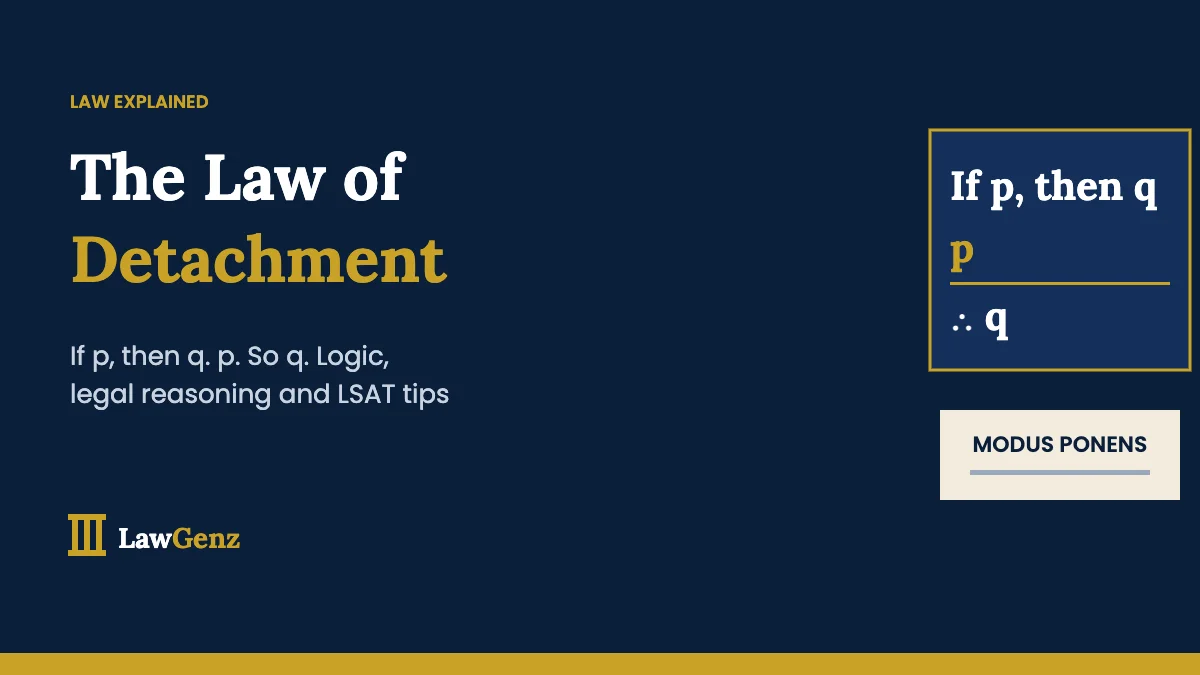
The law of detachment says if “If p, then q” is true and p is true, then q is true. See examples, common logic errors, how lawyers use it in IRAC, and LSAT conditional reasoning tips.

US law explained: your rights, the rules, and how the legal system works.
The law of detachment says if “If p, then q” is true and p is true, then q is true. See examples, common logic errors, how lawyers use it in IRAC, and LSAT conditional reasoning tips.
Aniah’s Law lets Alabama judges deny bail to people charged with certain violent felonies. Here is which charges qualify, how the detention hearing works, and what voters added in 2026.
A plain-English guide to the Texas Lemon Law as of October 2026: covered vehicles, the three repair tests, the six-month filing deadline, the $35 TxDMV fee, the hearing process, and buyback vs. replacement vs. repair.
The U.S. Constitution is the supreme law of the land under the Supremacy Clause in Article VI. Here is what it covers, how federal preemption works, where federal power stops, and the key Supreme Court cases.
Civil vs criminal law explained: who brings the case, burden of proof, outcomes, defendant rights and examples, with a comparison table.
What common law marriage is, which states recognize it, the requirements, how to prove it, and why it matters for divorce and benefits.

Premises liability law holds property owners responsible for injuries from unsafe conditions. Learn what you must prove and state rules.
Implied consent law means drivers agree to DUI chemical tests after arrest. Learn refusal penalties, Supreme Court rules and state differences.

The DC minimum wage is $18.40 an hour from July 1, 2026. Learn the tipped wage, who is covered, overtime and how to report unpaid wages.
The DC sales tax rate is 6%, with 10% on meals and 15.95% on hotels. The 7% increase is delayed to October 1, 2027.